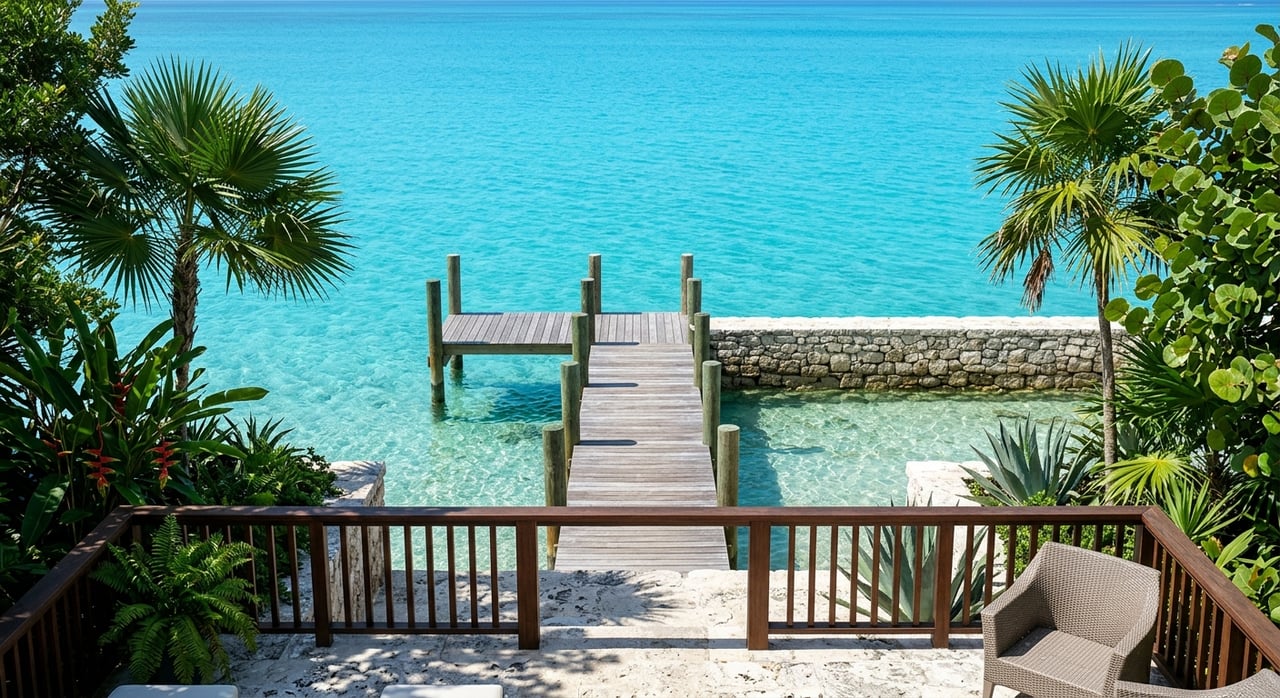
If you love boating, Palm Island can look like the dream: a private island setting in Miami Beach, direct bay frontage on many lots, and quick reach to both Downtown Miami and South Beach. But waterfront living here is not one-size-fits-all, and the details matter more than the headline. If you are considering Palm Island, this guide will help you understand what really shapes the boating lifestyle, from dock setup to access routes to lot orientation. Let’s dive in.
Why Palm Island Stands Out
Palm Island sits within Miami Beach’s Palm-Hibiscus-Star Islands area, a private enclave between Downtown Miami and South Beach. For buyers who want a waterfront address with a tucked-away feel, that location is a big part of the appeal.
For boaters, the island’s geography is the real story. Palm Island is one of the dredged-material islands in Biscayne Bay between the Venetian Causeway and the MacArthur Causeway, which places it in a boating-focused part of the bay with convenient access to major Miami waterways.
How the Island Layout Affects Real Estate
Palm Island is shaped like an elongated oval, with Palm Avenue running through the middle and North and South Coconut Lane on the west side. That layout creates two very different property types: an outer ring of waterfront lots and an inner ring of dry lots.
That distinction matters if boating is a priority for you. Not every home on Palm Island offers the same dock potential, the same water exposure, or the same vessel handling experience. On this island, location on the island can be just as important as the home itself.
The island also includes irregular and sometimes narrow lots, especially around the roundabout areas. That can affect usable yard space, dock configuration, and how comfortably a vessel can be moored at the property.
What Boaters Should Check First
If you are shopping Palm Island specifically for boating, four questions should guide your search:
- How deep is the water at the actual dock?
- Does the parcel offer no-fixed-bridge access?
- What size yacht can the dock realistically handle?
- What does the lot orientation mean for views and mooring?
These are the practical details that separate a beautiful waterfront home from a property that truly fits your boating lifestyle.
Dock Features Vary by Property
Current Palm Island listings show the level of boating amenities many buyers expect in this market. Some listings advertise 100 feet of waterfront frontage, private docks, multiple slips, boat lifts, and floating jet ski docks.
One current listing markets a dock that can accommodate yachts up to 90 feet. Another highlights 100 feet of waterfront, a dock, two slips, direct ocean access, and no fixed bridges. These examples make an important point: Palm Island has strong boating appeal, but the features are parcel-specific.
No-Fixed-Bridge Access Is Not Universal
You will often see no-fixed-bridge or ocean-access language in Palm Island marketing, but you should treat that as a property-level feature, not an island-wide guarantee. The island fronts Biscayne Bay, and Government Cut is the nearby deepwater Atlantic entry, which helps explain why some homes are especially attractive to serious boaters.
At the same time, route conditions and dock conditions are not uniform. A listing may present a strong boating package, but the actual usability of the dock depends on the specific parcel, the route out, and current water conditions.
Water Depth Needs a Closer Look
Water depth is one of the biggest issues buyers should verify before making a decision. NOAA describes Biscayne Bay as broadly shallow water, even though nearby Government Cut is dredged as a deep channel from the sea buoy into the port and to Fisher Island’s turning basin.
That difference is critical. A home may sit in a location that looks ideal on a map, but the practical question is whether your vessel can safely use the dock and nearby route under current conditions.
NOAA also notes that local channel conditions in the area can be much shallower and that shoaling and channel-edge changes can occur. In simple terms, do not assume a dock is yacht-ready just because the home is on Palm Island.
Why Permits Matter for Waterfront Upgrades
If you are planning to improve an existing waterfront setup, permitting is part of the process. Miami-Dade County requires marine-facility permits for many waterfront improvements, including docks, seawalls, boatlifts, davits, mooring or fender pilings, and some dredging or filling work.
The City of Miami Beach also notes that county approval is often needed before city plan review is complete. So if you are evaluating a property with plans to expand docking capacity or rework the marine setup, that due diligence should happen early.
Lot Orientation Changes the Experience
On Palm Island, boating value is not just about frontage. Orientation can shape how your yacht approaches the dock, how the outdoor space feels, and what you see from the house every day.
Because the island’s outer ring curves around Biscayne Bay, two homes with similar lot sizes can offer very different experiences. One property may be better positioned for navigable-water access and straightforward mooring, while another may stand out for skyline views, sunset exposure, or broader bay outlooks.
Current listing language across Palm Island regularly highlights bay views, skyline views, and sunsets. That pattern reinforces how much lot exposure matters in this market.
Views and Docking Go Together
For many buyers, the best Palm Island homes deliver both boating function and a strong visual setting. A southwest-facing home may be prized for navigable-water positioning and access language, while another may stand out for Miami skyline views and dramatic sunsets from the residence.
That is why it helps to think beyond square footage and frontage alone. On Palm Island, the angle of the lot can influence both your boating day and your evening view.
Lifestyle Beyond the Dock
Palm Island is not only about waterfront access. It is part of a managed island community, and the Palm, Hibiscus and Star Islands Association describes the enclave as secure and friendly.
That sense of privacy and structure can be meaningful for full-time residents, second-home buyers, and anyone looking for a quieter setting within Miami Beach. It supports the appeal of Palm Island as a place where the property, the island setting, and the lifestyle all work together.
Nearby Amenities Add Convenience
Palm Island also benefits from useful public amenities nearby on the island. Palm Island Park includes a playground, three public tennis courts, a basketball court, open field space, a paddle court, a gazebo, and perimeter parking.
The City of Miami Beach is also advancing infrastructure improvements across Palm and Hibiscus Islands, including road reconstruction, drainage, pump stations, and a multipurpose path. For buyers, that speaks to ongoing attention to the island environment and daily usability.
South of Fifth Is Close By
Palm Island’s position between Downtown Miami and South Beach adds to its appeal for buyers who want both privacy and convenience. South of Fifth is the nearby dining district most people associate with this part of Miami Beach, and from Palm Island it is a short off-island trip.
That balance is part of what makes the island compelling. You can enjoy a residential waterfront setting while staying close to dining, entertainment, and the broader energy of Miami Beach.
What Smart Buyers Focus On
If you are comparing waterfront homes on Palm Island, it helps to approach the search with a boater’s checklist rather than a general luxury-home checklist. The most important questions are practical ones tied to vessel fit, route access, and day-to-day functionality.
Focus on the actual dock, not just the marketing language. Look closely at the parcel’s frontage, marine features, route conditions, and orientation. On Palm Island, those details often determine whether a property is simply waterfront or truly right for the way you want to live on the water.
For buyers and sellers in high-value coastal neighborhoods, this is where local knowledge makes a real difference. Understanding how a lot reads on paper is one thing. Understanding how it performs for boating, views, and long-term value is something else entirely.
If you are exploring Palm Island or preparing to position a waterfront property for the market, working with an advisor who understands Miami’s coastal inventory can help you make a more confident decision. Connect with Jennifer Brilliant for thoughtful guidance on luxury waterfront opportunities in Miami Beach and across greater Miami-Dade.
FAQs
What makes Palm Island appealing for boaters in Miami Beach?
- Palm Island appeals to boaters because it sits on Biscayne Bay in a private Miami Beach enclave, and some waterfront homes offer docks, multiple slips, and no-fixed-bridge or ocean-access features.
Does every Palm Island waterfront home have no-fixed-bridge access?
- No. No-fixed-bridge access is parcel-specific, so you should confirm the route and marine setup for the exact property you are considering.
How important is water depth at a Palm Island dock?
- Water depth is very important because Biscayne Bay is broadly shallow in many areas, and actual dock usability depends on current local conditions, vessel draft, and nearby channel depths.
Can you add or modify a dock on Palm Island?
- Some waterfront improvements may require Miami-Dade marine-facility permits, including work involving docks, seawalls, boatlifts, davits, pilings, and certain dredging or filling activities.
Why does lot orientation matter on Palm Island?
- Lot orientation can affect mooring, yard usability, and your views, including whether a property emphasizes bay, skyline, or sunset exposure.
What amenities are available on Palm Island itself?
- Palm Island Park offers amenities including a playground, public tennis courts, a basketball court, open field space, a paddle court, a gazebo, and perimeter parking.