Why does one Venetian Islands home sell for millions more than a similar-looking property a few doors down? On these coveted Miami and Miami Beach islands, tiny differences in exposure, dockage, and elevation can swing value by seven figures. If you are buying or selling here, you need to know which details matter most and how to use them to your advantage.
This guide breaks down the micro factors that drive pricing on the Venetian Islands and shows you how to document them, compare them, and negotiate with confidence. Let’s dive in.
Venetian Islands at a glance
The Venetian Islands sit in Biscayne Bay between the City of Miami and Miami Beach. Inventory is limited, many lots are narrow, and waterfront exposure is the main amenity. That combination makes values highly sensitive to each property’s exact features and orientation.
Because there are fewer directly comparable homes, prices can vary sharply, even within the same block. You will see fewer “cookie-cutter” comps and more case-by-case analysis driven by water exposure, view quality, elevation, and the condition of marine structures.
Island position and convenience
Island position affects both daily living and pricing. East-facing homes closer to Miami Beach often enjoy sunrise views and ocean breezes, while western sides look toward the Miami skyline and can feel more sheltered from bay chop. Neither is inherently better; each profile attracts a different buyer.
Proximity to bridges and major roads can command a convenience premium for faster access to downtown, the Design District, or South Beach. That said, easier access can also increase traffic noise and reduce privacy. If you value quiet, consider properties set back from the busiest corridors.
Open bay vs canal frontage
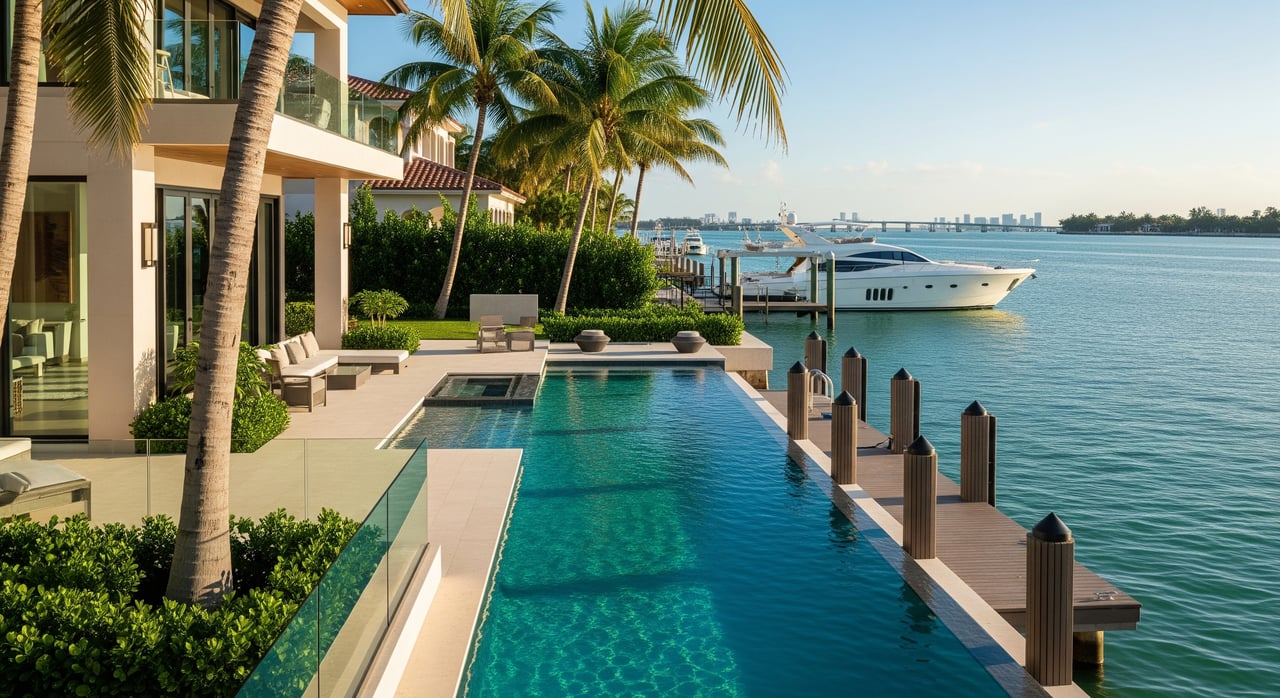
Open-bay frontage typically earns the top pricing tier. Buyers pay for wide, unobstructed water and skyline views, plus more direct access and deeper water. These lots often allow generous, straight-on docks and dramatic outdoor spaces.
Canal frontage is more sheltered and can be easier for daily boat handling. Canal homes can still trade at strong prices if they preserve a clear view corridor, provide excellent privacy, or offer superior dockage. Two similar houses can sell very differently based only on whether they face open bay or a canal, so confirm the orientation in documents and marketing.
Lot size, shape, and usable waterfront
On the Islands, value scales most directly with linear waterfront, not just land area. More feet of seawall usually means more view, more dock capacity, and more outdoor living options. A larger number on paper does not help if the lot is shallow or irregular in ways that limit the buildable envelope.
Always verify dimensions and legal waterfront descriptions in the county records. The Miami-Dade County Property Appraiser is your go-to for parcel data, lot dimensions, and legal descriptions. These records support pricing, appraisal, and feasibility for remodels or rebuilds.
Seawall condition and elevation
A strong seawall protects your yard, dock, and home. Older or undersized seawalls can require near-term replacement, which is a significant cost. Seawall condition often becomes a major negotiation point, especially when an engineer’s report identifies deficiencies or near-term maintenance needs.
Raising or rebuilding a seawall requires permits and coordination with coastal rules, which affects cost and timeline. To understand requirements early, consult the Florida Department of Environmental Protection and the U.S. Army Corps of Engineers. Knowing the regulatory path helps you price risk into your offer or listing strategy.
Dockage and bridge clearance
Boat capacity is a core value driver. Buyers look for slip length, beam, and water depth at the dock, measured at mean low tide. They also evaluate routes to open water, including bridge type and clearance.
Some routes include fixed bridges with limited vertical clearance or movable bridges with restricted opening times. If a property cannot accommodate a buyer’s preferred vessel height or length, expect a pricing adjustment. Dock construction and alterations typically require permits through the U.S. Army Corps of Engineers and state agencies, so keep records handy.
View corridors and orientation
A view corridor is the clear sightline from your property to open water, the Miami skyline, or other landmarks. Even on canal lots, a strategic orientation that looks down a wide canal or toward open water can lift value.
Document view quality with clear daylight photos and, if possible, drone imagery. Appraisals and buyer offers often segment homes by view quality: panoramic, partial, or canal. Small differences in landscaping or neighboring structures can change this perception, so confirm what is protected and what could change over time.
Renovation quality, elevation, and insurance
The quality of construction, ceiling heights, impact-rated windows, mechanical systems, and finishes matters, but on the water there is an added premium for resilience. Homes with elevated mechanicals, impact glazing, and finished floors above flood benchmarks typically enjoy broader buyer appeal.
Lenders and insurers evaluate a home’s elevation relative to Base Flood Elevation. Pull the property’s flood zone and request an elevation certificate through the FEMA Flood Map Service Center. Elevated homes often achieve better insurance terms and lower expected disruption during storms, which can justify a pricing premium.
Insurance and carrying costs
Waterfront ownership includes higher routine maintenance and potential insurance costs. Seawalls, docks, and saltwater wear require ongoing attention. Florida homeowners and flood insurance markets have seen shifting premiums and availability, so buyers should budget for potential increases.
Get quotes early and ask for a three-year insurance premium history when available. An elevated, well-maintained home can lower risk and stabilize carrying costs, which supports value and makes financing smoother.
How pricing bands work here
Appraisers and seasoned agents group Venetian Islands comps into pricing bands based on a handful of micro factors:
- Open bay or canal orientation
- Linear feet of waterfront and seawall
- Dock capability, including water depth and vessel size
- View quality and protected view corridors
- Renovation level and elevation relative to flood benchmarks
Within each band, condition and interior amenities create price increments. Across bands, price differences are significant. If your target property has a rare combination, such as a renovated bayfront with substantial seawall and deepwater dockage, expect appraisal challenges and be ready to support value with nearby contracts and competing listings.
Buyer strategy: verify before you bid
To avoid surprises and negotiate from strength, build your due diligence plan around the property’s marine and resilience profile:
- Commission a marine survey to measure depth at mean low tide, confirm slip geometry, and assess dock condition.
- Order a seawall inspection by a coastal engineer and secure a written estimate for repairs or replacement.
- Request an elevation certificate and verify the flood zone through the FEMA Flood Map Service Center. Obtain preliminary insurance quotes based on that documentation.
- Trace your boating route and verify bridge types and clearances that could limit vessel height.
- Confirm permits for docks, lifts, seawalls, and major renovations. Where applicable, review coastal permitting pathways with the Florida Department of Environmental Protection and the U.S. Army Corps of Engineers.
- Explore long-term flood exposure scenarios using the NOAA Sea Level Rise and Coastal Viewer to understand potential future conditions.
Use your findings to calibrate price, timelines, and contingencies. If inspections reveal material costs, you can request credits or repair escrows at closing.
Seller strategy: package your value
Sellers who document the waterfront story earn buyer confidence and often command stronger offers. Prepare a concise, complete folder that includes:
- Linear feet of seawall, date and scope of any repairs, and recent engineer reports
- Dock specifications, including length, beam, water depth at mean low tide, and any approved lifts
- Clear descriptions of bridge clearance on routes to open water
- Elevation certificate, flood zone, and current insurance premiums or recent quotes
- Daytime photos and drone images that show orientation and view corridors
- Permit history and certificates of occupancy for major work
These materials reduce buyer uncertainty and minimize time lost to follow-up questions during escrow.
Negotiation levers tied to micro factors
Several high-impact details commonly appear in counteroffers and credits:
- Seawall or dock condition. Engineer reports can justify price adjustments or repair escrows.
- Insurance terms. Unusually high premiums or mitigation needs may require concessions.
- Bridge clearance and access. If marketing implied deeper or taller vessel access than inspections support, expect a reprice.
- View obstructions. If a neighboring build has reduced the view, buyers may adjust offers based on the shift from panoramic to partial or canal outlooks.
Plan your negotiation strategy around these items and back every claim with documentation.
Due diligence resources
A handful of public tools can speed up verification and help you structure offers or listing packages:
- Parcel data and lot dimensions: Miami-Dade County Property Appraiser
- Flood zones and Base Flood Elevation: FEMA Flood Map Service Center
- Long-term sea level scenarios: NOAA Sea Level Rise and Coastal Viewer
- Coastal and marine permits: Florida Department of Environmental Protection and U.S. Army Corps of Engineers
- Market context and reports: Miami Association of Realtors
Use these early so you can select the right comparables and price the property’s exact profile accurately.
Bringing it all together
On the Venetian Islands, value lives in the details. Open bay vs canal, seawall length, dock depth, bridge clearance, view corridors, and elevation all influence what a buyer will pay and how a lender will appraise. When you document these elements clearly, you create confidence, shorten timelines, and protect your outcome.
If you are planning a sale or searching for the right home on the Islands, partner with an advisor who treats these details as non-negotiable. For a confidential consult and a data-led plan tailored to your goals, connect with Jennifer Brilliant.
FAQs
What drives pricing on Venetian Islands bay vs canal homes?
- Open-bay homes usually command higher prices for panoramic views and direct access, while canal homes gain value through sheltered dockage, privacy, and preserved view corridors.
How does seawall condition affect my purchase offer?
- A failing or undersized seawall can require significant near-term investment, so buyers often ask for credits or repair escrows based on an engineer’s report and cost estimate.
What should boaters verify before buying on the Islands?
- Confirm slip size, water depth at mean low tide, and any bridge clearance limits along routes to open water; these factors can cap vessel size and influence price.
How does elevation relative to flood benchmarks impact value?
- Homes with finished floors and mechanicals above flood benchmarks often secure better insurance terms and lower expected storm disruption, which supports higher pricing.
How can sellers prove value to premium buyers?
- Provide a complete package with seawall and dock specs, elevation certificate, insurance details, permit history, and clear photography that highlights orientation and view corridors.