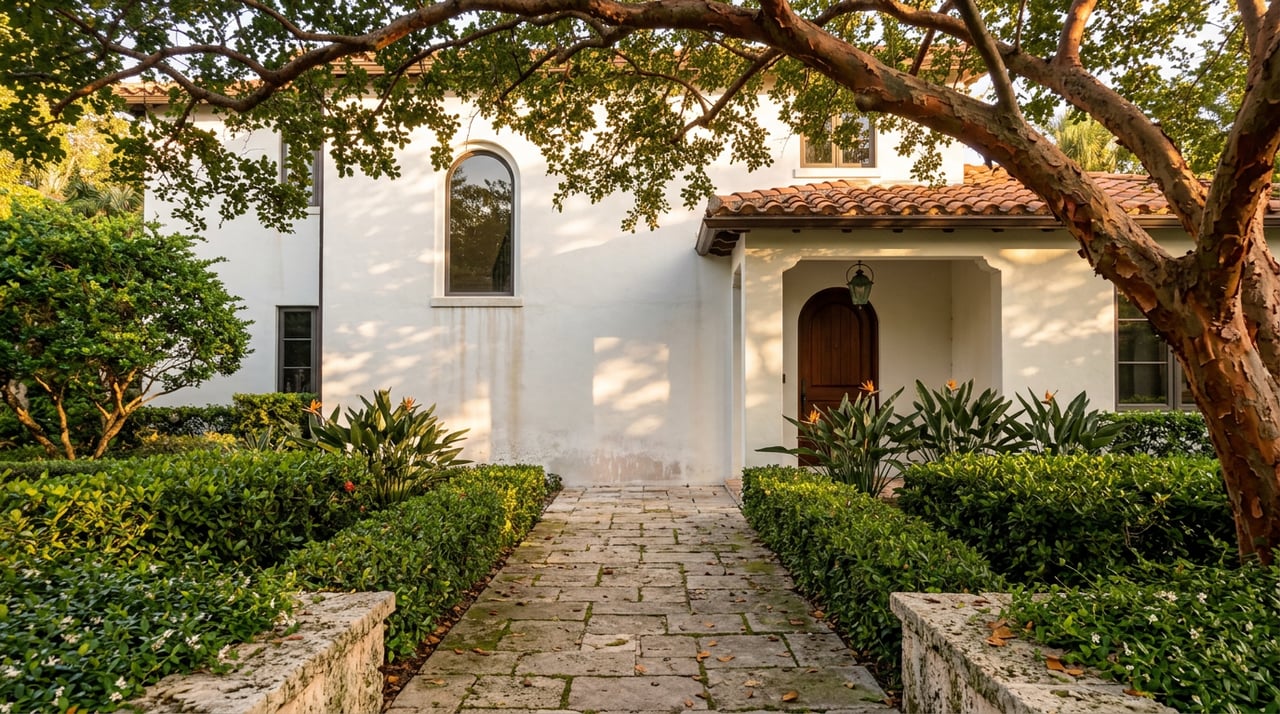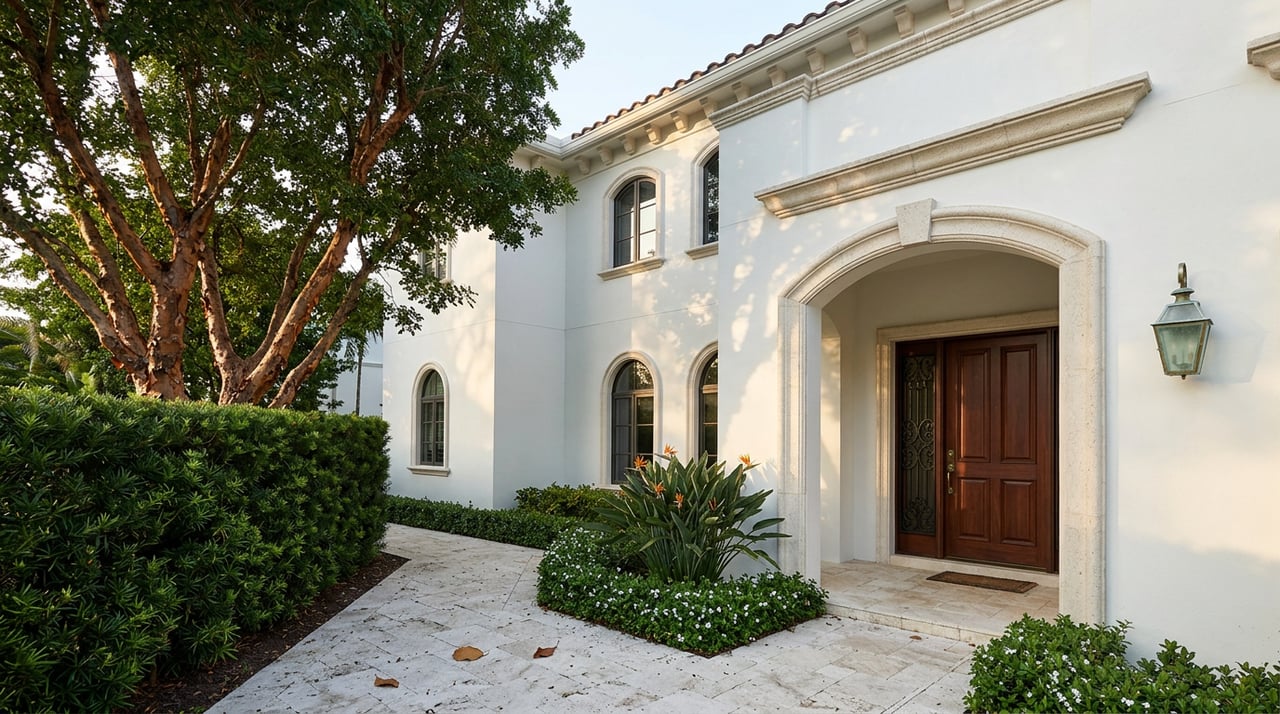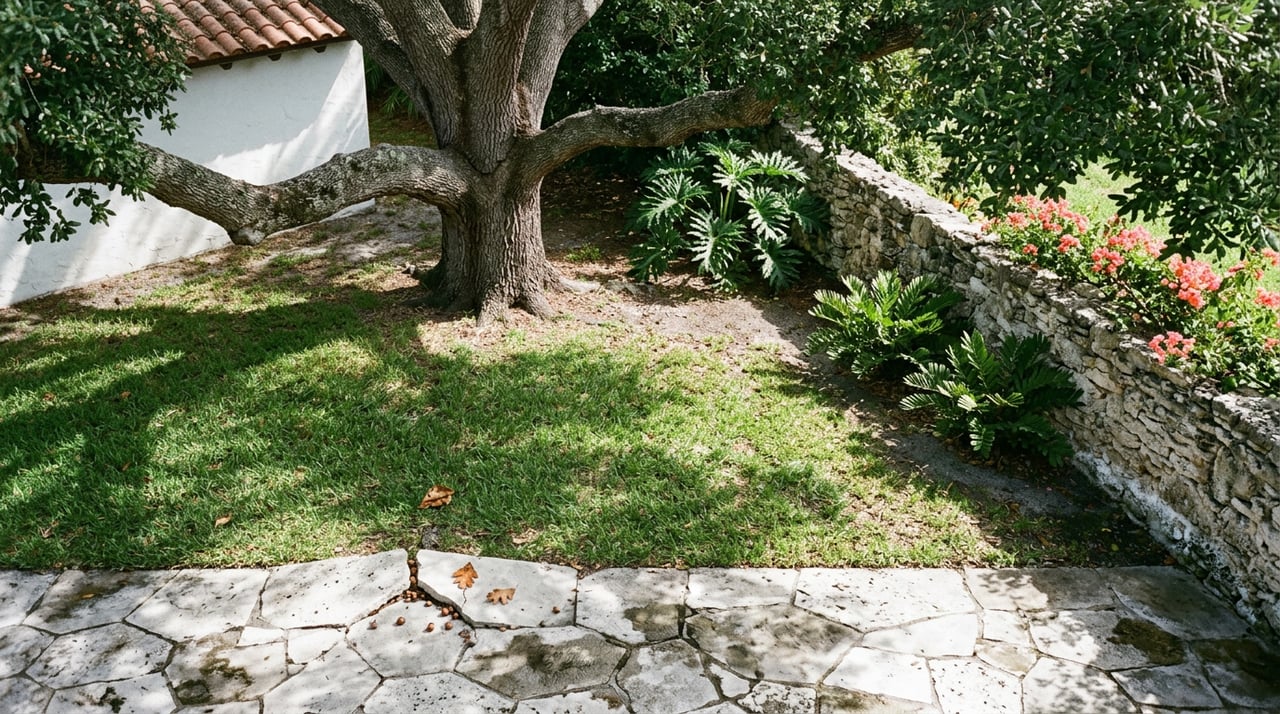
In May 2026, the City of Miami's Building Department had already done its job. It reviewed an application to remove two mature trees on Swanson Avenue in North Grove, a royal poinciana and a golden shower, and issued the permit. The owner had cleared the process that every renovation on a canopied Grove lot has to clear. Then Miami's Historic and Environmental Preservation Board took up the case on appeal and voted unanimously to reverse it, rejecting the argument that the trees posed a safety or traffic risk. The board's vice chair, Luis Prieto y Munoz, put the skepticism plainly during the hearing: "It's remarkable how every tree in a footprint is always diseased and problematic. I'd prefer to err on the side of a mature canopy."
That reversal is the fact anyone planning a renovation, addition, or teardown in Coconut Grove needs to sit with before they set a start date. A tree removal permit here is not a finish line. It is a proposal that becomes final only if nobody with standing challenges it inside a ten-day window. For a buyer or owner scheduling a contractor, ordering impact glass, or lining up a demolition crew, that window is not a formality. It is the single most unpredictable variable in the whole project.
The number that decides which review track you're on
Miami-Dade defines a specimen tree as any trunk measuring 18 inches or more in diameter at breast height, roughly four and a half feet off the ground. Below that threshold, a removal is a routine permit. At or above it, the application moves into a fuller review that typically requires a certified arborist's report and can run well past 30 days depending on how complete the file is.
On a mature Grove lot, that line runs through the middle of almost every serious renovation plan. Banyans, live oaks, royal poincianas, and gumbo limbos common to North Grove, South Grove, and the streets around Main Highway routinely exceed 18 inches long before they're old enough to be considered historic. Knowing which trunks on your survey cross that number, before your architect finalizes a site plan, is the difference between a straightforward permit and a file that draws an appeal.
Ten days, and not everyone gets to use them
The appeal window itself is short, but who can open it matters just as much as how long it stays open. Miami's rules limit standing to city residents and abutting property owners, and that limit has already decided outcomes this year.
On Grand Avenue, a plan to remove 57 trees for a Silver Bluff development featuring twelve pickleball courts, six padel courts, a tennis court, and a clubhouse drew an appeal from a challenger who was neither a Miami resident nor an adjacent owner. The city's Historic and Environmental Preservation Board dismissed the appeal on that technicality alone, and the removal was allowed to proceed. Silver Bluff had already proposed planting 18 replacement trees and contributing $119,000 to the city's tree fund to offset the loss.
Contrast that with El Prado Boulevard in South Grove, where a permit covering the removal of 15 trees and relocation of five others was appealed by a neighbor with clear standing. The board split 4-2 to reverse the permit, and the objection that swayed members wasn't about tree health. It was about where the replacement trees would go. Board members noted the property owners' mitigation plan concentrated nearly all of the 19 proposed hardwoods and 12 palms in a narrow strip at the rear of the lot, largely invisible from the street. Canopy replacing canopy on paper isn't the same as canopy anyone can see.
Here's how those three 2026 cases actually broke down:
| Property | Trees at stake | Appeal outcome | What decided it |
|---|---|---|---|
| Swanson Avenue, North Grove | 2 specimen hardwoods | Permit reversed, unanimous | Age and size afforded highest protection under city code |
| El Prado Boulevard, South Grove | 15 removed, 5 relocated | Permit reversed, 4-2 | Replacement trees hidden from public view |
| Grand Avenue (Silver Bluff project) | 57 trees | Removal proceeds | Appellant lacked standing to file |
The pattern is not that trees survive when they're healthy and come down when they're not. It's that an issued permit only holds if the right person doesn't object, and if they do, how visible your mitigation plan looks matters as much as how many inches of canopy it replaces.
What the trees cost when they do come down
Even when a permit survives its ten days untouched, removal isn't the end of the paperwork. Miami-Dade requires inch-for-inch replacement, and where a lot can't physically absorb enough new trees, the balance gets paid into the city's Tree Trust Fund as an in-lieu contribution.
That fund is not a rounding error. Between October 2022 and May 2024, the city collected 670 payments totaling close to $3 million, and the range says a lot about who's paying. Large developments carry the biggest numbers, like the $120,000 the developer of Elemi at Grove Village paid to clear 55 trees for a five-story project on Thomas Avenue. But plenty of the fund's activity came from single-family owners making far smaller moves: $1,250 on Frow Avenue, $4,000 on Trapp Avenue, $6,000 on Tequesta Lane, $11,000 on Battersea Road, all for lot clearing or room additions on ordinary Grove streets.
The lesson for anyone budgeting a renovation is that the fee scales with your ambition, but it rarely disappears entirely. If your plan touches a specimen tree, price the mitigation payment into your budget the same way you'd price impact windows or a new roof, not as a contingency you hope you won't need.
The other version of this problem: buying a lot where the trees are already gone
Everything above assumes you're the one filing the permit. But if you're buying a property where a previous owner already removed trees, the risk runs the other direction. Removing a protected tree without a permit is a code violation, and after-the-fact permits in Miami-Dade cost double the standard fee, on top of civil penalties that can reach five figures for specimen trees and multi-tree violations. That kind of unresolved matter tends to surface exactly where you don't want surprises: in the municipal records a title company checks before closing.
Before you write an offer on a canopied Grove lot, it's worth asking whether any tree removal or relocation permits have been filed on the address recently, and whether any of them were appealed. The El Prado case shows a permit can be reversed months after it's issued, which means a property could be sitting mid-dispute at the exact moment a buyer wants a clean closing.
The rules themselves are still being rewritten
None of this is settled ground. The City Commission created a ten-resident Tree Ordinance Advisory Committee on May 14, 2026, seating two appointees per district, including North Grove arborist Ian Wogan and FIU's Chris Baraloto for District 2. That committee launched what's expected to be an eight-month review in July 2026, with public workshops, online feedback, and a target of presenting recommendations to the Commission by March 2027. The District 2 workshop covering Coconut Grove was held August 20 at The Hangar at Regatta Grove, next to Miami City Hall.
Nothing about the 18-inch threshold, the ten-day appeal window, or the mitigation formula is guaranteed to look the same in a year. Anyone timing a renovation into 2027 should build slack into the schedule for the possibility that the process changes underneath them, not just the possibility that a neighbor appeals.
A few questions worth asking before you make an offer on a canopied lot, or before you break ground on one you already own:
- Has a tree removal or relocation permit been filed on this address in the past two years, and if so, was it appealed?
- Which trunks on your site plan measure close to 18 inches DBH, and has an arborist confirmed the number?
- Has your contractor priced a Tree Trust Fund contribution into the budget as a line item rather than an afterthought?
- Is your project timeline built around the assumption that an issued permit is final the day you receive it?
FAQ
What makes a tree a "specimen tree" under Miami's rules? Any trunk measuring 18 inches or more in diameter at breast height, about four and a half feet off natural grade. Crossing that number moves a removal into a fuller review that generally requires a certified arborist's report.
Who is allowed to appeal an issued tree permit? Standing is limited to city residents and property owners abutting the site. The Grand Avenue case this year showed how strictly that gets enforced when an appeal was dismissed because the person who filed it met neither condition.
How much time can an appeal actually add to a renovation? The formal window is ten days, but a challenge filed near the deadline can push demolition, and everything scheduled after it, into the following month. Build that possibility into any contract or vendor booking tied to a firm start date.
Coconut Grove's tree canopy is one of the things that makes the neighborhood worth the premium buyers pay for it, and the rules protecting it are only getting more scrutinized, not less. If you're weighing a purchase on a canopied lot, or you already own one and are mapping out what a renovation will actually take, Jennifer Brilliant can walk the site plan with you before you're locked into a timeline the tree file hasn't cleared yet. Let's Connect.