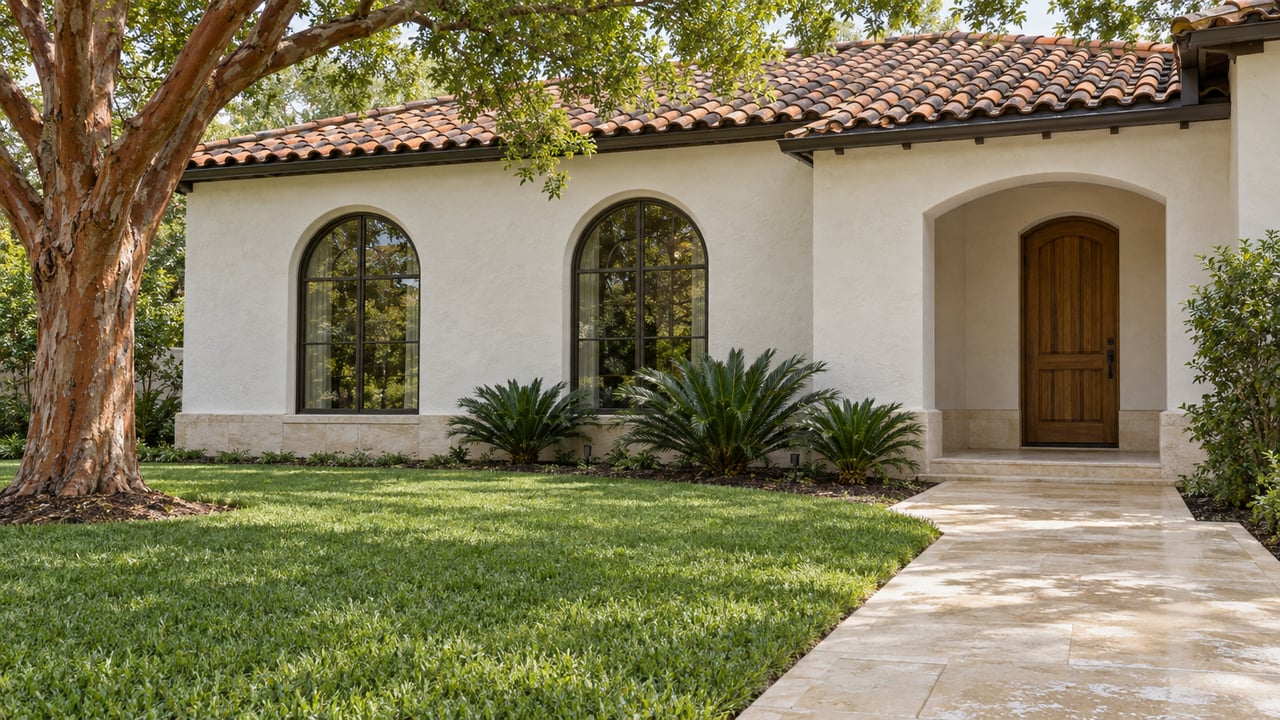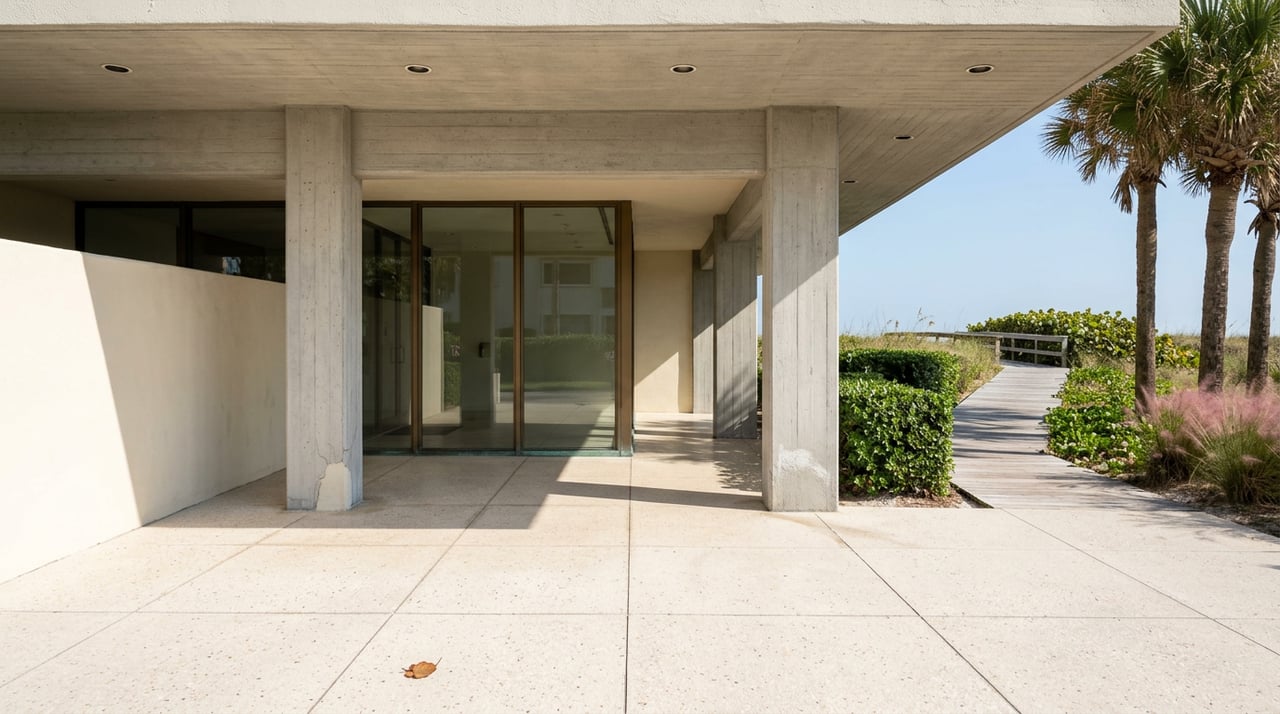
Drive north on Collins Avenue through Surfside and you pass two very different transactions happening at the same time. At 8777 Collins, cranes and fencing surround a construction site where a twelve-story tower designed by Zaha Hadid Architects is rising, unit by unit, with residences priced from $15 million. Several blocks north, a twelve-story building from 1967 sits quietly oceanfront, its owners fielding questions from prospective buyers about a document most of them had never heard of a few years ago: the structural integrity reserve study.
Both buildings sit on the same beach, in the same town, under the same Florida law. And that law prices them almost nothing alike.
The number that hides the real story
Ask for Surfside's median condo price and you'll get a single figure. It sounds like a fact. It behaves like a blend. Recent rolling twelve month data through July 2026 shows buyers closing transactions at an average of roughly $1,293 per square foot, while active listings on the market are asking closer to $1,523. Closed sales have averaged around $3.5 million. What's currently sitting unsold averages closer to $10.5 million. And the properties that have sold are moving in an average of 188 days, while what remains on the market has been sitting for an average of 342, an increase of roughly 82 percent.
That is not one market cooling. That is two markets trading on the same street, and the gap between them has almost nothing to do with square footage, finishes, or ocean frontage.
The building's age has become the single most predictive number in a Surfside condo transaction, more predictive than the price per square foot itself.
Why this particular half mile of Florida became the test case
Surfside is not just another beach town dealing with Florida's post-2021 condo reforms. It's the town where those reforms began. On June 24, 2021, Champlain Towers South, a twelve-story oceanfront building at 8777 Collins Avenue completed in 1981, partially collapsed and killed 98 people. In June 2026, the National Institute of Standards and Technology released its long-awaited technical findings, concluding that the failure began when two connections between garage columns and the pool deck gave way, triggering the collapse of the tower's central columns, according to NIST's findings summarized on Wikipedia.
Florida's legislature responded within a year with Senate Bill 4-D in 2022, refined by Senate Bill 154 in 2023 and again by House Bill 913 in 2025. The law created two mandates for condominium buildings three stories or taller: a milestone structural inspection once a building reaches 30 years of age, or 25 years if it sits within three miles of the coast, and a Structural Integrity Reserve Study that documents the condition of major components and sets a funding schedule to pay for their eventual replacement. Because Surfside's entire footprint sits within three miles of the Atlantic, every condo building in town falls under the shorter 25-year trigger, not the more forgiving 30-year one that applies farther inland.
The reserve rule matters even more than the inspection. Associations could once vote to waive or underfund reserves for major structural items to keep monthly fees low. That option closed for budgets adopted after December 31, 2024, and full funding took effect this January. A building's reserve study now has to show real money set aside for a roof, load-bearing walls, waterproofing, and several other components, and that money has to actually be there.
Why the roster tells the story better than the median
Walk Surfside's condo inventory by construction year and the divide sorts itself.
- Pre-1992, already living the reserve reset: Spiaggia (1965), Four Winds (1967), Manatee (1974), the small residence at 9124 Collins (1979), Champlain Towers North (1982), and Marbella (1989). Every one of these buildings had already passed its 25-year milestone trigger before the 2022 law existed. Their reserve studies are the ones quantifying components with little remaining useful life all at once, which is exactly the scenario the new funding rule was built to catch rather than let compound quietly.
- 1990s and early 2000s, crossing the line right now: Champlain Towers East (1994), Mirage (1995), Rimini Beach (1998), SoliMar (2001 to 2002), and the Waverly at Surfside (2003). Several of these buildings are hitting the 25-year mark for the first time within the current decade, which means their inaugural milestone inspections and reserve studies are current news rather than settled history. This is the tier where document review before an offer matters most, because the building's compliance status is often still being written.
- 2014 and after, operating on a different clock entirely: Ocean Seven (2014), Fendi Chateau Ocean (2016), Surf Club Four Seasons (2017), and the recent arrivals Surf Row and Seaway at the Surf Club, both delivered in 2024. None of these face a milestone inspection before the late 2030s, and the newest of them not until the late 2040s. Florida law does still require every condo building three stories or taller to have a reserve study on file regardless of age, since that requirement is tied to height rather than age. But a study on a 2024 building documents components with most of their useful life still ahead.
That third tier is also underwritten to the current Florida Building Code from the day the certificate of occupancy is issued, something older stock simply cannot retrofit its way into.
| Built before 1992 | Built 2014 and after | |
|---|---|---|
| Milestone inspection status | Past the 25-year milestone trigger | Won't trigger before the late 2030s at the earliest |
| Reserve study reality | Pricing in decades of deferred components at once | Documents components with most useful life still ahead |
| Insurance posture | Premiums reflect age and pre-code construction | Underwritten to current code from day one |
| Financing exposure | Risk of losing Fannie Mae or Freddie Mac warrantability if documentation lags | Full conventional financing, no legacy drag |
The address where this started is now a construction site for a new building
The clearest illustration of the divide sits on the exact footprint of the tragedy that caused it. Damac, the Dubai-based developer, bought the 8777 Collins Avenue site for $120 million in 2022 and hired Zaha Hadid Architects to design a twelve-story building of 37 residences averaging roughly 7,000 square feet, priced from $15 million with averages closer to $35 to $40 million and penthouses that could reach more than $150 million. Construction is underway and expected to finish in 2029.
As of an April 2026 report, the project had not closed a single contract, and the developer acknowledged that its initial 2025 sales launch had been premature, saying it was resubmitting its master building permit and lining up insurance and a general contractor before relaunching sales later this year, according to reporting from The Real Deal.
Whenever that building delivers, it will carry a first-day reserve study and a milestone inspection clock that doesn't start running for another quarter century. A few blocks north, a 1967 building on the same street is living the opposite side of the identical law, with a reserve study now pricing in components that have been aging since Lyndon Johnson was president. Same zip code, same beach, same statute, and almost opposite economics.
What this means if Surfside is one of several neighborhoods you're comparing
If you're weighing Surfside against another Miami-Dade coastal address, the neighborhood median won't tell you what you actually need to know. The better question is which decade of Surfside you're buying into. A legacy building can still be a sound purchase if its reserve study is funded and its milestone inspection is clean. That's a document review, not a guess, and it's worth asking for the actual reports rather than trusting the monthly fee on its own. A newer building carries a price premium for the very thing an older one is now racing to buy back: time before the next mandatory reckoning.
According to SavingAdvice, Miami-Dade County responded to the financial pressure this has created for longtime owners by announcing plans, reported in January 2026, to reopen its condominium special assessment loan program for owners at or below 140 percent of area median income, offering loans up to $50,000 with a 40-year repayment term. It's a sign of how much real money this law has already moved through the market, not a substitute for reading a building's own documents before writing an offer.
None of this is legal or financial advice. Every building's situation is specific, and any buyer serious about a Surfside condo should review the current milestone inspection report, the reserve study, and recent board minutes with their own counsel before making a decision.
A few questions worth asking before you tour
Does an older building automatically mean a bad investment? Not at all. Several 1980s and 1990s Surfside buildings have completed their inspections and are funding reserves properly, and they trade at a premium over neighbors that haven't. The building's paperwork matters more than its birth year alone.
How do I check where a specific building sits in this cycle before making an offer? Ask for the milestone inspection report, the current Structural Integrity Reserve Study, and the last two years of board meeting minutes. Build in enough time to review them alongside the building’s other financial and inspection records.
Does this apply to Surfside's single-family homes too? No. The milestone inspection and reserve study requirements apply to condominium and cooperative buildings three stories or taller under Florida's Chapter 718. Surfside's single-family stock is not subject to these particular rules.
If you're comparing Surfside against Bal Harbour, Bay Harbor Islands, or another stretch of this coastline and want a read on where a specific building actually stands, that's the conversation worth having before you tour. Jennifer Brilliant has spent two decades watching this exact stretch of Collins Avenue change block by block, and can walk you through what a building's documents actually say before you fall for its view. Let's Connect.