The National Register of Historic Places added the Miami Beach Architectural District to its rolls on May 14, 1979. Over the following nine years, four of the buildings inside that same boundary came down anyway: the Senator, the New Yorker, the Boulevard, and the Biscaya. A federal listing does not stop a wrecking ball. It never did. What actually decides whether a building stands, and what an owner may do to the one still standing, is a local review process that most buyers do not think about until they are already holding the keys.
That process runs through the Miami Beach Historic Preservation Board, and its authority reaches further into a unit than most people expect.
The board that actually runs the district
The Historic Preservation Board has seven members. Two seats are reserved by name, one for the Miami Design Preservation League and one for the Dade Heritage Trust. The rest go to two at-large residents of historic districts with design or architectural background, a Florida-registered architect experienced in historic rehabilitation, a longer-tenured at-large resident, a university architecture faculty member with preservation expertise, and a water resources expert: an engineer, hydrologist, or floodplain manager. That last seat is a fairly recent addition to the roster, and its presence says something about how the board now thinks about a 1930s building on a barrier island.
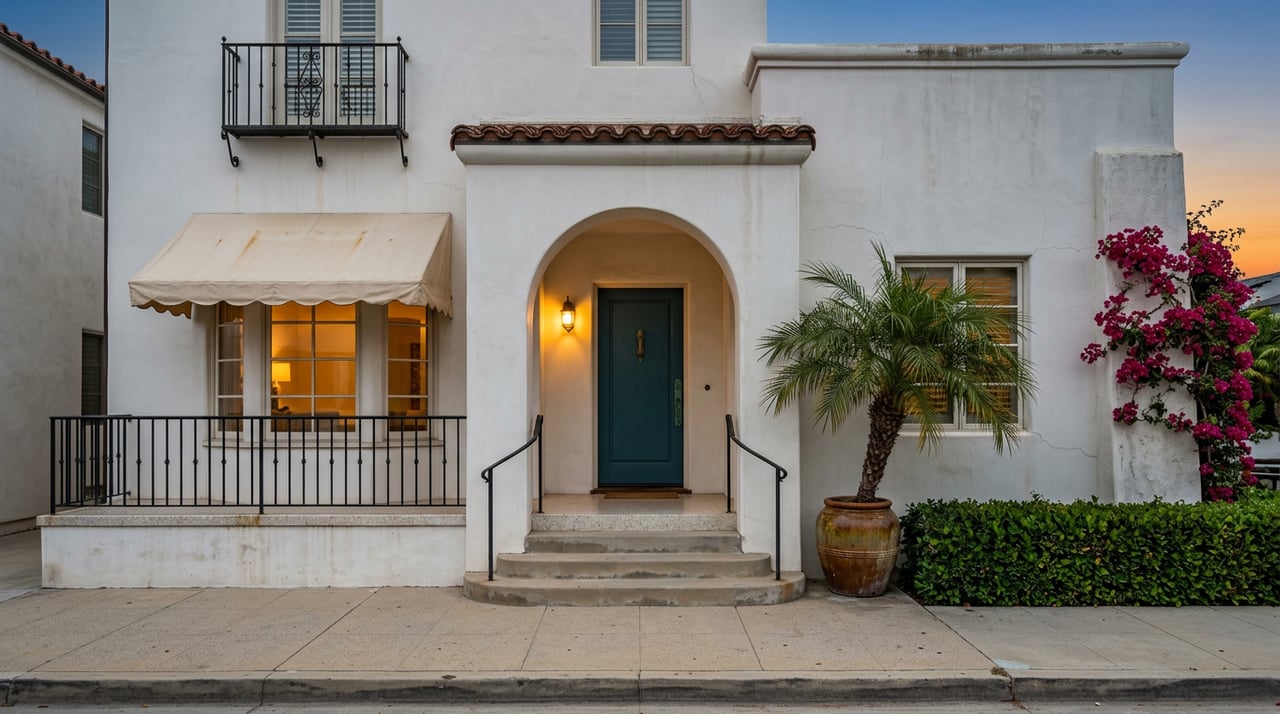
The district itself covers roughly a square mile of South Beach, bounded by the Atlantic Ocean to the east, Sixth Street to the south, Alton Road to the west, and the Collins Canal and Dade Boulevard to the north. Inside those lines sit more than 800 designated historic structures, the largest concentration of Art Deco architecture in the world, built mostly between 1923 and 1943. Two buildings on the same block, both marketed as Art Deco, can carry different structural systems, different decades of construction, and different regulatory categories. The style is a marketing word. The designation is a legal one, and it is not uniform.
What the board actually reviews
Buyers tend to assume historic review means the facade and nothing else. The scope is broader. Under Miami Beach's code, a Certificate of Appropriateness covers new construction, alterations, modifications, and improvements, not just demolition. In practice that reaches windows, doors, railings, glass block, paint colors, signage, rooftop equipment, and anything that changes a building's massing. The things a new owner most wants to change after closing are frequently the things that require a certificate first.
Not everything requires a full hearing before the board. According to the city's own planning department, repairs, window and storefront replacement, awnings, canopies, exterior paint, minor life-safety demolition, and facade restoration can be approved administratively by staff, as long as the scope satisfies the review criteria. Anything larger goes to a hearing, and the city states plainly that those applications are generally scheduled between three and four months out, depending on when the application lands and how complete the package is. A complete, well-prepared package moves faster than an incomplete one, which the planning department also notes directly. Once a certificate is granted, the building permit and inspection process still follows behind it, on top of whatever time the hearing itself took. None of that is unusual for the district. It is unusual for a buyer who assumed the renovation would run on a normal residential timeline.
Why the windows are the argument, not a detail
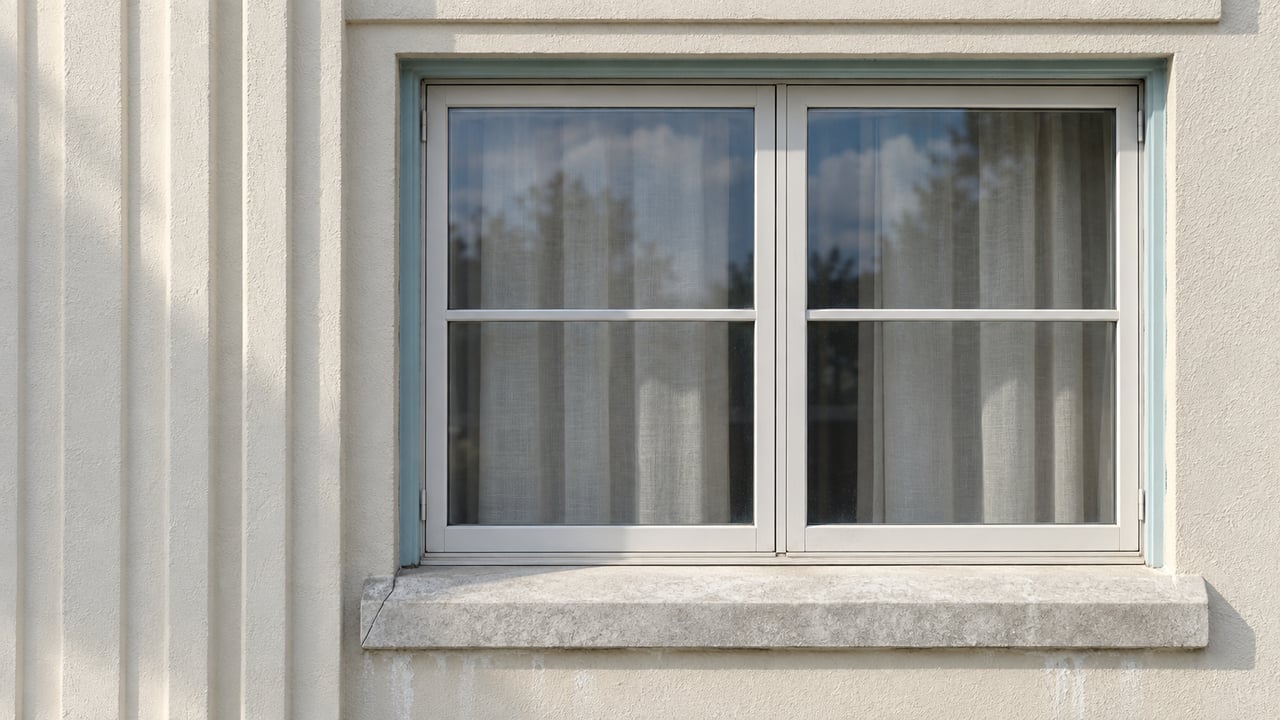
Ask any contractor who has worked inside this district long enough and the conversation turns to windows faster than anything else. Original steel casement windows are exactly the kind of character-defining feature the preservation process exists to protect. They are also thermally poor, difficult to source replacement parts for, expensive to restore properly, and not built to current impact standards.
Miami-Dade's High-Velocity Hurricane Zone rules push in the opposite direction from preservation. The county wants impact-rated glazing. The board wants the original profile, the original mullion pattern, the original look from the street. Both requirements are legitimate and both are mandatory, and a buyer who assumed a broken casement window was a simple swap discovers that it sits at the exact point where two regulatory systems disagree about the same piece of glass. That disagreement, more than paint color or signage, is where renovation timelines and budgets actually move.
The counterexample that proves it is workable, not impossible
None of this means Art Deco ownership is a losing proposition for anyone who wants to update a unit. Investor Robert Balzebre completed six Art Deco restoration projects in Miami Beach, converting aging apartment buildings, including the Arcadia, the Maritime, Espanola Court, and the Santana, into condominiums. All six were finished on time and on budget. That track record later carried him into a multimillion-dollar renovation of a historic oceanfront hotel on Collins Avenue, done in partnership with a national hospitality brand.
"We worked with the city to restore it to all its unique features and preserve those," Balzebre said of that project, "in addition to all the building codes that we met or exceeded."
The lesson from that record is not that the process is easy. It is that the process is predictable once you know its shape, and predictable is something a buyer can plan around.
The geography that changes the math entirely
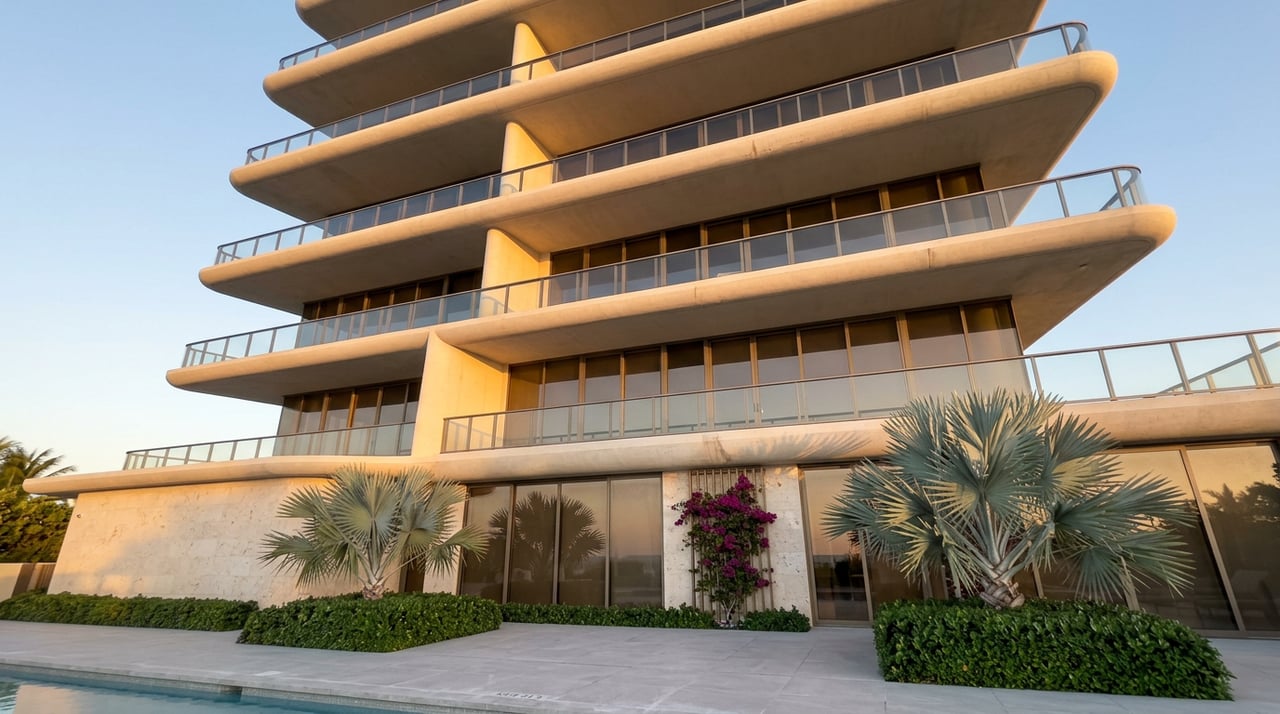
Not every beautiful building on Miami Beach carries this regulatory weight, and the boundary matters as much as the architecture. North of the historic district's edge, a run of Miami Modern buildings from the 1950s offers much of the same aesthetic sensibility, the curved corners and the tropical color language, without sitting inside the district's review lines. A buyer drawn to the look of the era but not to a board hearing has that option, and it is purely a function of address rather than style.
What to confirm before you sign
A seller's disclosure will not tell you what the Historic Preservation Board has already approved or already rejected for a specific unit or building. That history exists, but it exists in board records, not in the listing sheet. Before writing an offer on anything inside the district boundaries, it is worth asking directly:
- What exterior work, including windows, has already received a Certificate of Appropriateness for this building, and what has the board specifically declined
- Whether the building is classified as Contributing or Non-Contributing to the district, since that classification shapes how much latitude any future work will have
- Whether any proposed change to your unit would qualify for staff-level administrative approval or would require a full hearing
- What the condominium association's own alteration approval process requires, separate from the city's process, since both apply at the same time
Buying an Art Deco unit in Miami Beach is buying into a maintained, actively governed asset, not a blank interior behind a pretty facade. That is not a reason to avoid the district. It is a reason to know, before the ink dries, exactly which parts of the building are yours to change and which parts belong to a board that has been protecting this particular square mile since long before you arrived.
If you are weighing a purchase inside Miami Beach's historic boundaries and want to understand what a specific building's approval history actually allows, Jennifer Brilliant can walk through it with you before you write an offer.